INTRODUCTION:
There are few things more frustrating than a hot summer day with an AC that’s running but not actually cooling your home. The system sounds like it’s working, the fan is blowing, but the air coming out of your vents is warm — or barely cool at best.
Before you pick up the phone and schedule a $150 service call, it’s worth knowing that the majority of AC cooling problems have simple causes that homeowners can diagnose and fix themselves in under an hour. In fact the most common cause of an AC not cooling — a dirty air filter — costs less than $10 to fix and takes five minutes.
This guide walks you through the 8 most common reasons your AC isn’t cooling your house, starting with the simplest and cheapest fixes first, so you can solve the problem without spending more than you have to.
H2: Cause 1 — Clogged Air Filter
A clogged air filter is the single most common cause of an AC that runs but doesn’t cool effectively. When your filter is blocked with dust and debris, airflow through your system drops dramatically. Less air moving across the evaporator coil means less heat gets removed from your home — and the air coming out of your vents feels weak and barely cool.
How to fix it: Locate your air filter — either inside your air handler, behind a return air vent, or in a dedicated filter slot near your furnace. Pull it out and hold it up to a light. If you can’t see light through it, replace it immediately with a fresh MERV 8 pleated filter.
This fix costs between $5 and $20 and takes five minutes. Always try this first before investigating anything else.
H2: Cause 2 — Dirty Outdoor Condenser Unit
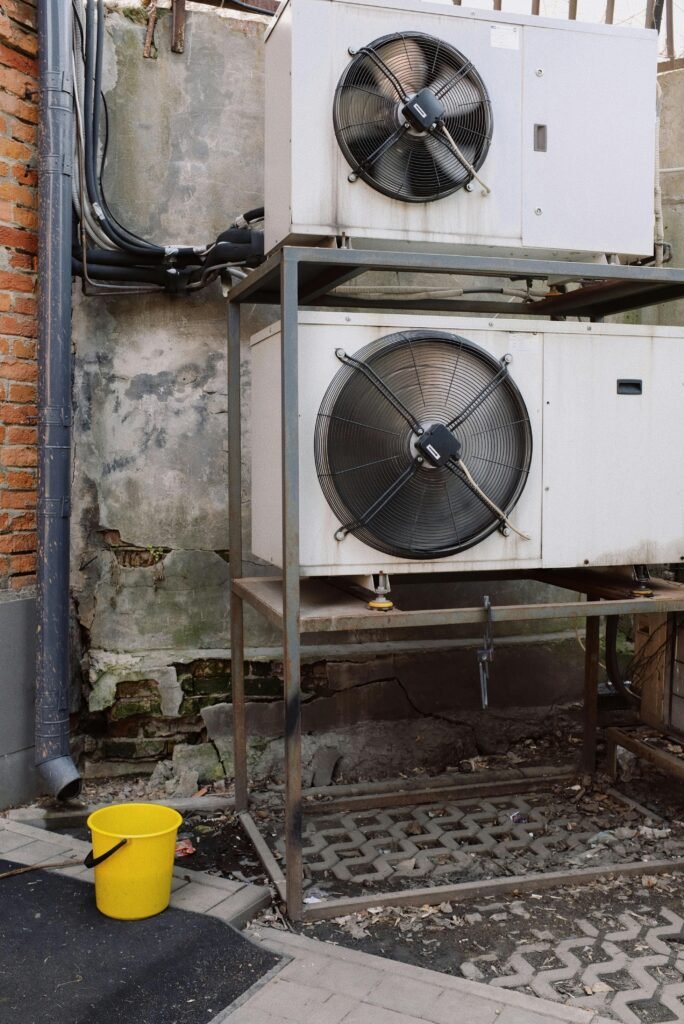
Your outdoor condenser unit releases heat from your home into the outside air. When it’s coated in dirt, grass clippings, leaves, and debris, it can’t release heat efficiently — which means your system struggles to cool your home even when it’s running continuously.
How to fix it: Turn off power to the unit at the outdoor disconnect box. Remove any debris from the top and sides by hand. Use a garden hose on a gentle setting to rinse the fins from the inside out. Trim back any plants or vegetation within two feet of the unit. Restore power and give the system 30 minutes to stabilize before checking cooling performance.
H2: Cause 3 — Frozen Evaporator Coil
Your evaporator coil — the component inside your air handler that actually cools the air — needs steady airflow to function correctly. When airflow is restricted by a clogged filter, blocked vents, or low refrigerant, the coil can drop below freezing and ice over completely.
A frozen evaporator coil is a serious problem that stops your AC from cooling entirely. You may notice ice forming on the refrigerant lines running to your indoor unit, or water dripping around your air handler as the ice melts.
How to fix it: Turn your thermostat to fan only mode — not off, not cool, but fan only. This circulates warm air over the coil and thaws it out over one to three hours. Do not run the system in cooling mode while the coil is frozen — this can damage the compressor.
Once thawed, identify what caused the freezing in the first place. Check your filter, check that all vents are open, and if the problem recurs with a clean filter and open vents, low refrigerant is the likely cause and you’ll need a technician.
H2: Cause 4 — Low Refrigerant
Refrigerant is the substance that absorbs heat from inside your home and releases it outside. When refrigerant levels are low your system loses its ability to cool effectively — even if everything else is working perfectly.
Unlike a car’s oil, refrigerant doesn’t get consumed during normal operation. If your level is low it means there’s a leak somewhere in the system — a problem that won’t fix itself and will get worse over time.
Warning signs of low refrigerant:
- AC runs constantly but barely cools
- Ice forming on refrigerant lines or the evaporator coil
- Hissing or bubbling sounds near the indoor or outdoor unit
- Higher energy bills with reduced cooling performance
How to fix it: This is not a DIY repair. Adding refrigerant requires EPA certification and specialized equipment. Call a licensed HVAC technician to locate the leak, repair it, and recharge the system. Skipping the leak repair and just adding refrigerant is a temporary fix that will fail again quickly.
H2: Cause 5 — Thermostat Issues
Before assuming there’s a mechanical problem with your AC, rule out thermostat issues. A surprising number of cooling complaints come down to simple thermostat problems that take two minutes to fix.
Check these things first:
- Is the thermostat set to Cool and not Heat or Fan Only?
- Is the set temperature actually lower than the current room temperature?
- Are the batteries dead or low? Replace them and test again.
- Is the thermostat located near a heat source like a lamp, TV, or sunny window that could be giving it a false high reading?
How to fix it: Replace the batteries, verify the settings, and if the thermostat is in a poor location consider having it relocated or upgrading to a smart thermostat that uses multiple sensors to measure temperature more accurately throughout your home.
H2: Cause 6 — Leaky or Blocked Ductwork
Your duct system carries cooled air from your AC to every room in your home. If ducts are leaking, disconnected, or blocked, cooled air never reaches its destination — it escapes into your attic, walls, or crawl space instead.
The Department of Energy estimates that the average home loses 20 to 30 percent of its cooled air through duct leaks. That means your AC could be working perfectly but a third of its output is going to waste.
Signs of duct problems:
- Some rooms cool well while others stay warm
- Weak airflow from certain vents
- Visible gaps or disconnected sections in accessible ductwork
- Unusually high energy bills
How to fix it: Inspect accessible ductwork in your attic, basement, or crawl space for obvious gaps, disconnections, or damage. Seal small leaks with HVAC metal foil tape — not regular duct tape. For major duct issues or ducts in inaccessible areas, a professional duct inspection and sealing service is the most effective solution.
H2: Cause 7 — AC Unit Is Too Small for Your Home
An undersized AC unit will run continuously on hot days without ever reaching your set temperature. This is especially common in older homes where window units or smaller systems were installed before the home was expanded, or in homes where the AC was replaced with an incorrectly sized unit.
Signs your AC is undersized:
- The system runs all day without turning off
- Your home never reaches the set temperature on hot days above 90°F
- The system cools adequately on mild days but struggles when temperatures rise
- Your energy bills are extremely high despite reasonable thermostat settings
How to fix it: Unfortunately there’s no quick fix for an undersized unit — the long term solution is replacing it with a properly sized system. A qualified HVAC technician can perform a Manual J load calculation to determine the exact cooling capacity your home requires.
In the short term, reducing heat gain helps — keep blinds closed during peak sun hours, seal gaps around windows and doors, add insulation to your attic, and use ceiling fans to supplement cooling.
H2: Cause 8 — Condenser Fan Motor Failure
The condenser fan sits on top of your outdoor unit and pulls air through the condenser coils to release heat outside. If this fan motor fails, heat can’t escape — your system loses its ability to cool and the compressor can overheat and shut down.
Signs of condenser fan failure:
- The outdoor unit is running but the fan on top isn’t spinning
- The outdoor unit feels extremely hot to the touch
- Your system runs briefly then shuts off — the compressor overheating protection is triggering
- You hear humming from the outdoor unit but no fan noise
How to fix it: Turn off your system immediately if you suspect condenser fan failure — running the compressor without the fan can cause expensive compressor damage. This repair requires a technician. A condenser fan motor replacement typically costs between $200 and $700 depending on the unit and labor rates in your area.
H2: When to Call a Professional
Try the DIY fixes first — filter replacement, condenser cleaning, and thermostat checks resolve the majority of cooling complaints. Call a professional HVAC technician if:
- The evaporator coil refreezes after thawing and filter replacement
- You suspect low refrigerant
- The condenser fan isn’t spinning
- Your system trips a breaker repeatedly
- The system runs constantly without cooling on days under 95°F
- You hear grinding, screeching, or banging from the indoor or outdoor unit
Catching these problems early almost always results in a lower repair bill than waiting until the system fails completely.
H2: Frequently Asked Questions
Q: Why is my AC running but not cooling below 75 degrees? The most common causes are a dirty filter, dirty condenser coils, low refrigerant, or an undersized unit. Start with the filter and condenser cleaning — these free fixes solve the problem in the majority of cases.
Q: How long should it take my AC to cool my house by 10 degrees? A properly functioning AC should cool your home by roughly 1 degree every 15 to 20 minutes under normal conditions. If it’s taking significantly longer your system may be undersized, low on refrigerant, or have airflow restrictions.
Q: Can I run my AC if the evaporator coil is frozen? No — running your AC with a frozen evaporator coil can permanently damage the compressor, which is the most expensive component in your system. Switch to fan only mode to thaw the coil before resuming cooling operation.
Q: Why does my AC cool some rooms but not others? Uneven cooling is usually caused by duct leaks, blocked vents, or an improperly balanced duct system. Check that all vents in warm rooms are fully open and unobstructed. If the problem persists, duct leaks or an undersized system are the most likely culprits.
Q: My AC was working yesterday — why is it suddenly not cooling? Sudden cooling failure is most often caused by a tripped circuit breaker, a frozen evaporator coil, or the outdoor unit losing power. Check your breaker panel first, then check whether the outdoor unit is running. If the outdoor unit is running but there’s no cooling, a frozen coil or refrigerant issue is likely.
Q: How much does it cost to fix an AC that’s not cooling? It depends entirely on the cause. A filter replacement costs $5 to $20. A condenser cleaning costs nothing. A refrigerant recharge costs $150 to $400. A condenser fan motor costs $200 to $700. A compressor replacement costs $1,000 to $2,500. This is why diagnosing and fixing simple causes first always makes sense.