INTRODUCTION:
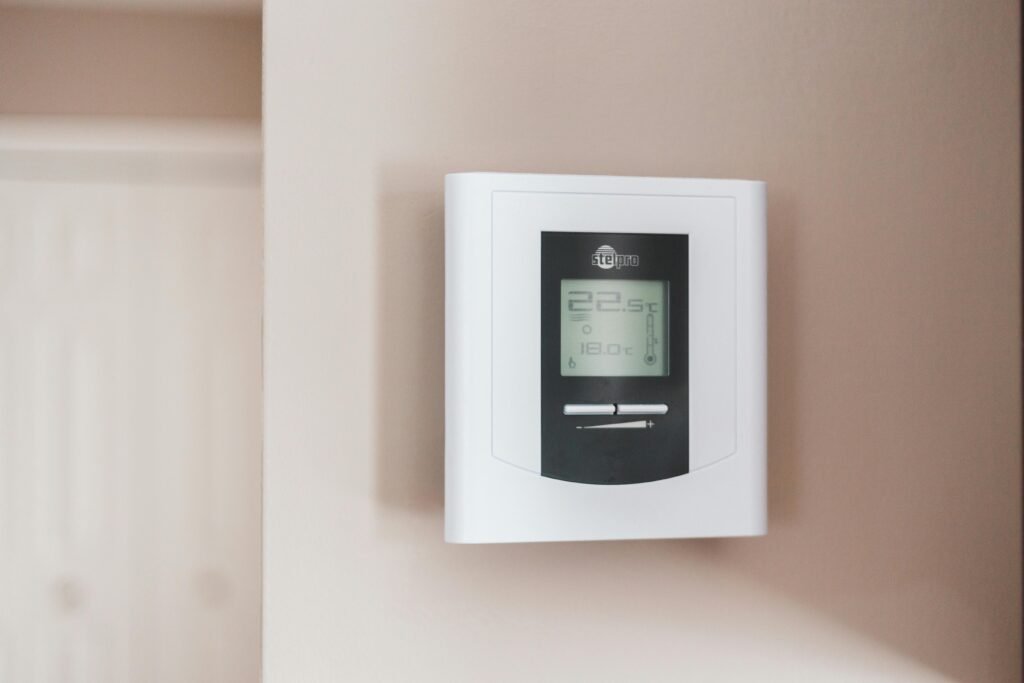
A programmable thermostat is one of the simplest and most cost effective upgrades you can make to your home’s heating and cooling system. By automatically adjusting your home’s temperature based on your schedule — lowering it when you’re away or asleep and raising it when you’re home — a programmable thermostat can reduce your heating and cooling costs by 10 to 15 percent without any sacrifice in comfort.
Unlike smart thermostats that learn your schedule automatically programmable thermostats put you in direct control of your temperature schedule. You set it once and it runs your programmed schedule reliably every day — no WiFi required, no app needed, no subscription fees.
This guide covers the best programmable thermostats available in 2026 across every price point and use case — from basic 5-2 day programmable models to advanced 7-day programmable thermostats with touchscreen displays.
H2: Programmable vs Smart Thermostat — Which Do You Need?
Before diving into specific models it’s worth understanding the difference between programmable and smart thermostats so you can make the right choice for your situation.
Programmable thermostats: You manually set a temperature schedule — specifying what temperature you want at what times on what days. The thermostat follows your programmed schedule precisely without any learning or automation. No WiFi or smartphone required. Typically costs $25 to $100.
Smart thermostats: Learn your schedule automatically, can be controlled remotely via smartphone app, provide energy usage reports, and integrate with smart home systems. Require WiFi and typically a smartphone. Typically cost $100 to $250.
Choose a programmable thermostat if: Your schedule is consistent and predictable — you wake up, leave, return, and sleep at roughly the same times each day. You prefer simplicity over features — set it once and forget it. You don’t want to pay for smart thermostat features you won’t use. Your home doesn’t have WiFi or you prefer not to connect home systems to the internet. Your budget is limited — programmable thermostats deliver most of the energy savings of smart thermostats at a fraction of the cost.
Choose a smart thermostat if: Your schedule varies significantly from day to day. You want remote control from your phone. You want integration with Alexa, Google Home, or Apple HomeKit. You’re willing to pay more for convenience and additional features.
For homeowners with consistent schedules a quality programmable thermostat delivers 80 to 90 percent of the energy savings of a smart thermostat at 20 to 30 percent of the cost. The extra features of a smart thermostat are genuine conveniences — but they’re not necessary for significant energy savings.
H2: Types of Programmable Thermostats
Programmable thermostats come in three main scheduling configurations:
5-2 Day Programming Sets one schedule for weekdays Monday through Friday and a different schedule for weekends Saturday and Sunday. Ideal for homeowners with consistent weekday and weekend routines. The most common and simplest programmable thermostat type.
5-1-1 Day Programming Sets one schedule for weekdays, a separate schedule for Saturday, and another for Sunday. Good for households where Saturday and Sunday follow different routines.
7-Day Programming Sets a completely independent schedule for each day of the week. Maximum flexibility for households with varying daily schedules. Slightly more complex to program but provides the most precise control.
For most homeowners 5-2 day programming provides adequate flexibility. If your weekend schedule is consistent — waking up at the same time both days and following similar routines — 5-2 programming handles it perfectly. Only households with truly variable schedules benefit from 7-day programming.
H2: Best Overall Programmable Thermostat — Honeywell Home RTH7560E
The Honeywell Home RTH7560E is the most popular programmable thermostat on Amazon and consistently one of the top rated models across all major retailers. It strikes the ideal balance of features, ease of use, and price — making it the best choice for most homeowners.
What makes it the best overall: The RTH7560E offers 7-day programming with 4 time periods per day — wake, leave, return, and sleep — giving you precise control over your temperature schedule throughout the week. The large backlit display is easy to read and the programming interface is more intuitive than most competing models.
Installation takes most homeowners 20 to 30 minutes — the included installation guide is clear and well organized. The thermostat works with most standard heating and cooling systems including gas, oil, and electric forced air systems.
Key features: 7-day programmable scheduling with 4 periods per day. Large backlit display showing current temperature, set temperature, and time. Permanent hold and temporary hold functions for schedule overrides. Compatible with most single-stage heating and cooling systems. Includes a built in keypad lock to prevent accidental changes.
What it doesn’t have: WiFi connectivity, smartphone control, or smart home integration. If you want those features you need a smart thermostat.
Price range: The Honeywell Home RTH7560E typically retails for $25 to $40 — making it one of the best values in home comfort products.
Best for: Homeowners who want reliable programmable scheduling without paying for smart thermostat features they don’t need.
H2: Best Budget Programmable Thermostat — Emerson 1F78-144
If you want the simplest possible programmable thermostat at the lowest possible price the Emerson 1F78-144 delivers exactly that. It’s a no-frills 5-2 day programmable thermostat that does one thing — follow your temperature schedule — without any unnecessary complexity.
What makes it the best budget option: Simple 5-2 day programming with 4 periods per day covers the needs of most households. The programming process is straightforward — one of the simplest interfaces of any programmable thermostat on the market. Installation is quick and the large display is easy to read.
Key features: 5-2 day programmable scheduling. Large clear display. Auto changeover between heating and cooling. Filter change reminder. Backlit display for easy reading in low light.
Price range: The Emerson 1F78-144 typically retails for $20 to $30 — the most affordable quality programmable thermostat available.
Best for: Budget conscious homeowners who want basic programmable scheduling without any extra features or complexity.
H2: Best Programmable Thermostat with Touchscreen — Honeywell Home RTH9585WF
For homeowners who want the simplicity of a programmable thermostat combined with a premium touchscreen interface the Honeywell Home RTH9585WF bridges the gap between basic programmable and full smart thermostat.
What makes it stand out: The large color touchscreen display makes programming and daily use significantly easier than button-based thermostats. The interface is intuitive enough that most users can complete programming without consulting the manual.
The RTH9585WF also includes WiFi connectivity — making it technically a smart thermostat — but it’s designed to function primarily as a programmable thermostat with the option of smartphone control rather than requiring an app to function.
Key features: 7-day programmable scheduling with 4 periods per day. Large color touchscreen display. WiFi connectivity with smartphone app — optional, not required. Compatible with most single stage and multi-stage heating and cooling systems. Works with Alexa for voice control. Easy installation with guided setup process.
Price range: The Honeywell Home RTH9585WF typically retails for $60 to $80 — a significant step up from basic programmable thermostats but well below premium smart thermostat pricing.
Best for: Homeowners who want a premium touchscreen interface and optional smartphone control without committing to a full smart thermostat price point.
H2: Best Programmable Thermostat for Heat Pumps — Honeywell Home RTH7560E with Heat Pump Compatibility
Heat pump systems require thermostats that support O/B wiring for the reversing valve — the component that switches the system between heating and cooling modes. Many basic programmable thermostats don’t support heat pump wiring configurations.
What to look for: When selecting a programmable thermostat for a heat pump system confirm the thermostat explicitly supports heat pump systems and includes an O/B terminal. Look for models that support both O and B wiring to ensure compatibility with your specific heat pump brand.
Recommended options: The Honeywell Home RTH7560E supports heat pump systems with up to 1 heat and 1 cool stage. The Emerson Sensi Touch — while technically a smart thermostat — is the most heat pump friendly programmable-style thermostat available and worth the modest price premium for heat pump owners.
H2: Best Programmable Thermostat for Multi-Stage Systems — Honeywell Home RTH8560D
If your HVAC system has two-stage heating, two-stage cooling, or both you need a thermostat specifically designed for multi-stage systems. Standard single-stage programmable thermostats won’t properly control multi-stage equipment.
What makes the RTH8560D stand out: The Honeywell Home RTH8560D supports up to 2 heat and 2 cool stages — covering the majority of residential multi-stage systems. The 7-day programmable scheduling and intuitive interface are the same as the RTH7560E with the addition of multi-stage system support.
Key features: 7-day programmable scheduling. Supports 2-stage heating and 2-stage cooling. Large backlit display. Compatible with heat pump systems. Includes emergency heat setting for heat pump backup.
Price range: The Honeywell Home RTH8560D typically retails for $45 to $65.
Best for: Homeowners with two-stage or variable capacity HVAC systems who want programmable thermostat simplicity without smart thermostat pricing.
H2: Programmable Thermostat Comparison Chart
Here’s a quick side by side comparison of all recommended models:
Honeywell Home RTH7560E Price: $25 to $40 Scheduling: 7-day, 4 periods Display: Backlit LCD WiFi: No Heat pump support: Yes Multi-stage: No Best for: Most homeowners — best overall value
Emerson 1F78-144 Price: $20 to $30 Scheduling: 5-2 day, 4 periods Display: Large LCD WiFi: No Heat pump support: Limited Multi-stage: No Best for: Budget buyers wanting simplicity
Honeywell Home RTH9585WF Price: $60 to $80 Scheduling: 7-day, 4 periods Display: Color touchscreen WiFi: Yes — optional Heat pump support: Yes Multi-stage: No Best for: Touchscreen users wanting optional app control
Honeywell Home RTH8560D Price: $45 to $65 Scheduling: 7-day, 4 periods Display: Backlit LCD WiFi: No Heat pump support: Yes Multi-stage: Yes — 2 stage Best for: Multi-stage system owners
H2: How to Program a Programmable Thermostat
Programming varies slightly between models but the general process is the same for most programmable thermostats:
Step 1 — Enter programming mode Press the Schedule or Program button on your thermostat. Most models display the day or days being programmed and the time period — Wake, Leave, Return, Sleep.
Step 2 — Set your wake period Select the time you typically wake up and the temperature you want your home to be at that time. For heating season this is your comfortable daytime temperature. For cooling season this is your comfortable daytime cooling setpoint.
Step 3 — Set your leave period Select the time you typically leave for work or school and the energy saving setback temperature. For heating set this 7 to 10 degrees lower than your comfort temperature. For cooling set this 7 to 10 degrees higher. This is where your energy savings come from.
Step 4 — Set your return period Select the time you typically return home. Set the temperature back to your comfort level. Your thermostat will start adjusting before this time so your home is comfortable when you arrive.
Step 5 — Set your sleep period Select your bedtime and a sleep temperature. Most people sleep comfortably at cooler temperatures — 65 to 68°F in winter. Setting back 5 to 7 degrees at bedtime provides additional energy savings.
Step 6 — Repeat for weekend schedule On 5-2 day thermostats set a separate weekend schedule that reflects your Saturday and Sunday routine. On 7-day thermostats set each day individually as needed.
Step 7 — Verify and save Review your programmed schedule before exiting programming mode. Press Done or Run to activate the schedule.
H2: How Much Can a Programmable Thermostat Save You?
The energy savings from a programmable thermostat depend on how aggressively you set back the temperature during away and sleep periods.
The Department of Energy estimates that setting your thermostat back 7 to 10 degrees for 8 hours per day saves approximately 10 percent per year on heating and cooling costs.
For the average American household spending $900 per year on heating and cooling a 10 percent savings equals $90 per year. A $30 programmable thermostat pays for itself in less than 4 months and continues saving money for 10 or more years.
Homeowners who previously left their thermostat at a constant temperature 24 hours a day often report savings of 15 to 20 percent in the first year after installing a programmable thermostat — savings that significantly exceed the cost of the thermostat itself.
H2: How to Install a Programmable Thermostat
Installing a programmable thermostat is a straightforward DIY project for most homeowners:
Step 1 — Turn off your HVAC system Go to your electrical panel and switch off the breaker for your heating and cooling system. Never work on thermostat wiring with power on.
Step 2 — Remove the old thermostat Remove the thermostat cover. Take a photo of the wiring before disconnecting anything — this is your reference for the new installation. Note which wire connects to which terminal — common terminals are R, G, Y, W, C, and O/B.
Step 3 — Label the wires Use the label stickers included with most new thermostats to label each wire with its terminal letter before disconnecting.
Step 4 — Disconnect and remove the old thermostat base Disconnect all wires from the old thermostat terminals. Remove the screws holding the base plate to the wall and remove the old base.
Step 5 — Mount the new base plate Thread the wires through the opening in the new base plate and mount it to the wall using the included screws. Most base plates include a built in level — use it to ensure straight mounting.
Step 6 — Connect the wires Connect each labeled wire to the corresponding terminal on the new thermostat following the included wiring diagram. Match the terminal letters — R wire to R terminal, G wire to G terminal, and so on.
Step 7 — Attach the thermostat and restore power Snap the thermostat onto the base plate and restore power at the breaker. Insert batteries if required — many programmable thermostats use batteries as backup or primary power.
Step 8 — Program your schedule Follow the programming steps in the previous section to enter your temperature schedule.
Most programmable thermostat installations take 20 to 30 minutes. If you encounter wiring that doesn’t match the standard terminal letters take a photo and consult the thermostat manufacturer’s compatibility guide or call a technician.
H2: Common Programmable Thermostat Problems and Fixes
Thermostat not following the programmed schedule Check that the thermostat isn’t in Hold mode — a hold overrides the programmed schedule and maintains a constant temperature until the hold is cancelled. Look for a Hold button or setting and cancel any active holds.
Display is blank Replace the batteries — even thermostats with hardwired power use batteries as backup and a low battery can cause display issues. If batteries don’t fix it check the circuit breaker for the HVAC system.
Temperature is inaccurate Your thermostat may be in a poor location — near a heat source, in direct sunlight, near a drafty window, or in a room that doesn’t represent your home’s average temperature. Thermostat relocation improves accuracy and comfort throughout the home.
HVAC system runs constantly The programmed temperature setpoint may be set too aggressively — your system can’t reach the set temperature under current conditions. This is normal on extremely hot or cold days. If it happens regularly have your system inspected for performance issues.
Can’t figure out how to program it Download the owner’s manual from the manufacturer’s website — search your model number followed by “manual.” Most manufacturers also have YouTube tutorials for their specific thermostat models.
H2: Frequently Asked Questions
Q: Do programmable thermostats really save money? Yes — consistently and significantly. The Department of Energy’s research confirms 10 percent annual savings from basic setback programming. Homeowners who use their programmable thermostat as designed routinely report 10 to 20 percent reductions in heating and cooling costs.
Q: Is a programmable thermostat hard to install? No — most homeowners with basic DIY comfort can install a programmable thermostat in 20 to 30 minutes. The main challenge is matching the wiring from your old thermostat to the terminals on the new one — taking a photo before disconnecting any wires makes this straightforward.
Q: Will any programmable thermostat work with my HVAC system? Not all thermostats are compatible with all systems. Most standard programmable thermostats work with conventional forced air systems — gas, oil, or electric furnaces with central AC. Heat pump systems, multi-stage systems, and electric baseboard heating require thermostats specifically rated for those applications.
Q: Do I need a C wire for a programmable thermostat? Basic battery-powered programmable thermostats don’t require a C wire — they run entirely on batteries. Thermostats with backlit displays or WiFi connectivity require more power and typically need a C wire or include a power adapter kit.
Q: What temperature should I program my thermostat to? The Department of Energy recommends 68°F when home and awake in winter, 60 to 65°F when asleep or away in winter. In summer 78°F when home and 85°F when away. These settings optimize energy savings while maintaining comfort — adjust based on your personal comfort preferences.
Q: How long do programmable thermostats last? A quality programmable thermostat typically lasts 10 years or more. The most common failure is battery corrosion from leaving dead batteries in place — check and replace batteries annually to extend thermostat life.